Pre-Configured, Chemical Tank Monitoring That Deploys in 5 Minutes.
- Simple setup. No complex programming or software engineering degree required. Set your zones and adjust tank depth settings directly and intuitively—saving hours of programming frustration.
- Built to Survive Harsh Chemicals: While generic sensors corrode or require expensive custom upgrades, the polypropylene sensor enclosure is built natively for aggressive acids, vapors, and industrial environments.
- Unmistakable Local Alerts: Don’t let critical warnings get buried in a crowded software dashboard. The built-in 316 Stainless Steel buzzer blasts a punishing 103dB alert directly on the plant floor, paired with a vibrant physical stack light for instant visual confirmation.
- Plug-and-Play Installation: Equipped with a standard 2-inch NPT thread for instant mounting into existing tank ports.
- Phone or email Alerts with No Subscription Fees: Add the optional Wi-Fi module to instantly dispatch automated restock emails or text alerts to your suppliers. Secure, easy setup.
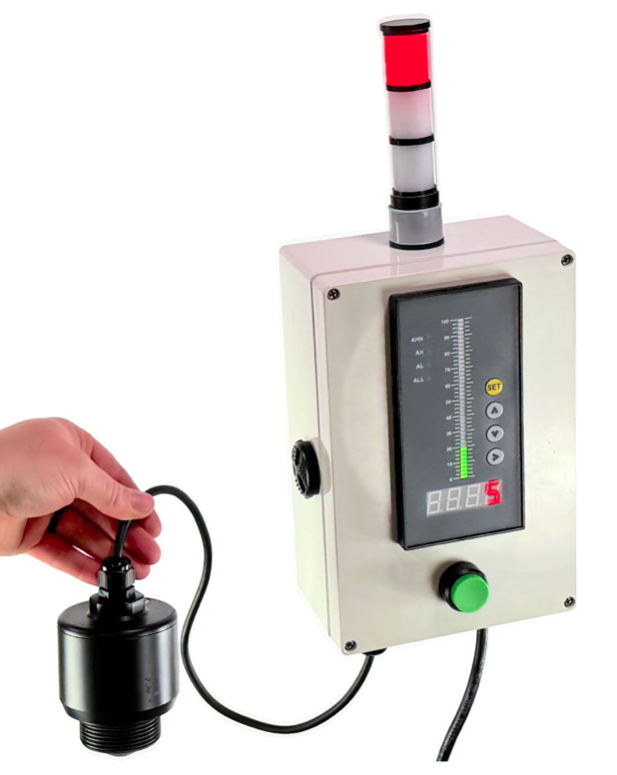
Liquid level gage for tanks displays the level in the tank with a bar graph and numerical display.
There are four independent alarm points that can be configured many different ways. A popular setup is to have a H, HH, L and LL alarm which are indicated on the stack light. In addition, it can send a text message or email, and keep a record of tank levels.
RADAR
Radar sensors measure liquid depth by sending electromagnetic waves of energy down to the liquid surface. The time it takes for the waves to bounce back is directly related to the depth of the liquid. Radar sensors are know for high accuracy and reliability. They are known for their success in challenging environments that might include vapour, gases, temperature variations, extreme temperatures, extreme dust, or foam. This is because the signal reflects best from materials that have a high dielectric constant. In fact, they will even sense through low-dielectric materials like foams or plastics. So if the tank is plastic, then the tank could be monitored without even needing a hole in the tank!
INSTALLATION
The sensor can be set to sense a zone in the tank so it does not necessarily have to sense from the very bottom to the top. This is desirable for cone-bottom tanks where you don’t want to sense material in the cone part.
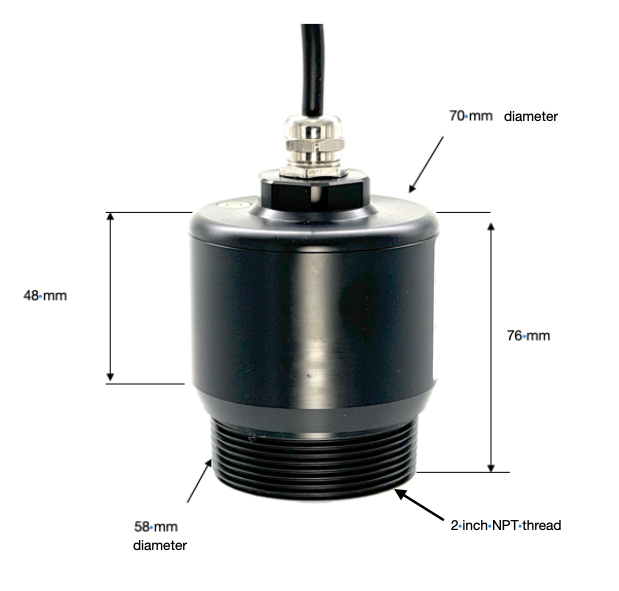
The radar sensor has a 2 inch NPT thread for easy mounting in tank ports. The cable is 32 ft long so it easily fits on larger tanks.
There are 4 alarm outputs that can be configured various ways. So you could have an early warning when a tank gets to one level, (possibly on the yellow stack light) and then another alarm at a lower level. (probably the red stack light + buzzer) And then another action like an email communication at yet another level. This way suppliers can be notified automatically to dispatch a re-supply. Let us know how you want it set up and we’ll do the setup for you!
HOW TO EASILY REPLACE YOUR FAILED LEGACY SYSTEM:
- Unscrew the Exisiting Sensor: The LG-R features a standard, rugged 2-inch NPT male thread. It spins directly into the exact same tank-top bung or flange connection used by standard industry sensors (like the Flowline EchoTouch or E+H Micropilot). No drilling or structural modifications required.
- Mount the Local Control Box: Mount the high-visibility NEMA 4X box to a nearby wall or structural beam using four standard screws. This completely bypasses the need to wire a new display back to a central, distant PLC control cabinet.
- Plug in for Instant Power: Plug the control box directly to any standard 120VAC plant circuit. The system turns on instantly.
- Set Your Depth in Seconds: Use the intuitive, direct-entry controls to match the height of your tank. The narrow-beam radar automatically locks onto the liquid surface—completely ignoring low-dielectric foam or interior tank obstructions that trip up older ultrasonic sensors.
Software download to manage the sensor with a phone
RADAR sensor instructions from the manufacturer
Video of the gauge being used to control liquid level.
Video of a RADAR controller
Changing the tank depth settings video.
MATERIALS
- Enclosure material……………………………ABS
- Enclosure seal……………………………… solid PVC elastomer
- Cord grips (2)…………………………………Nylon
- Buzzer diaphragm…………………………………316 stainless steel
PHYSICAL PROPERTIES
- Buzzer volume……………………………… 103dB @ 2ft.
- Operating temp (ambient)………………… -40 to 60ºC (-76-140ºF)
- Ingress protection…………………………… IP65 (NEMA 4X)
ELECTRICAL
- Relay carry current……………………………10 A
- Power …………………………………………120VAC (other voltages by request)
RADAR
- Mounting threads……………………………2 inch NPT
- Frequency……………………………………79-81 GHz
- Beam angle …………………………………8º
- Maximum sensing depth……………………15 m
- Minimum sensing depth……………………100 mm (blind zone)
- Cable length…………………………………32 ft
- Radar enclosure…………………………… polypropylene
- Ingress……………………………………… IP67
ORDER HERE
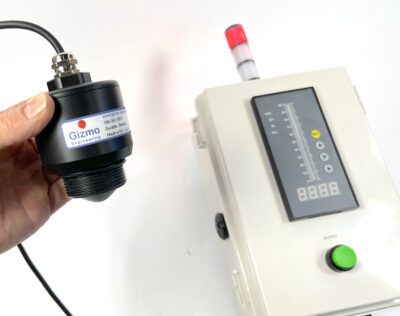
LG-R
Liquid Level Gage with radar sensor
$1450
Options
Extra cable
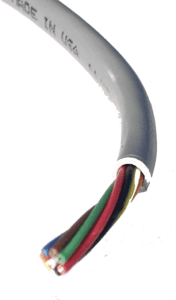
(applies to LG-S only) Extra cable length over the standard length of 10 feet that’s included. Heavy 0.032″ jacket for superior durability. Four stranded conductors x 24 gage.
[C4] $1.28/ft
WIFI communication
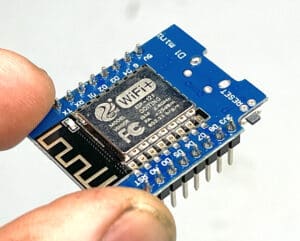
Sends a message to your email or text message to your phone using exsisting WIFI. Easy setup. No recurring fees. More info.
[WF-1] $195